
St Patrick’s Church
Find out about the history and the connection with St Patrick.
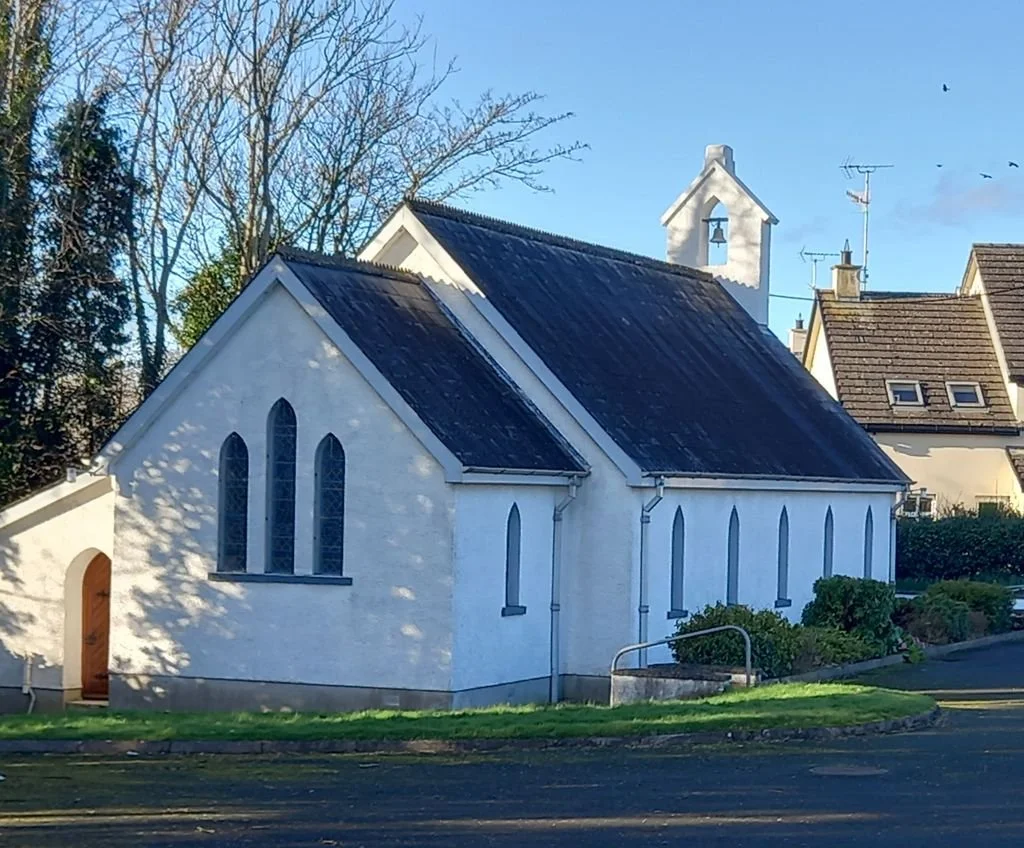
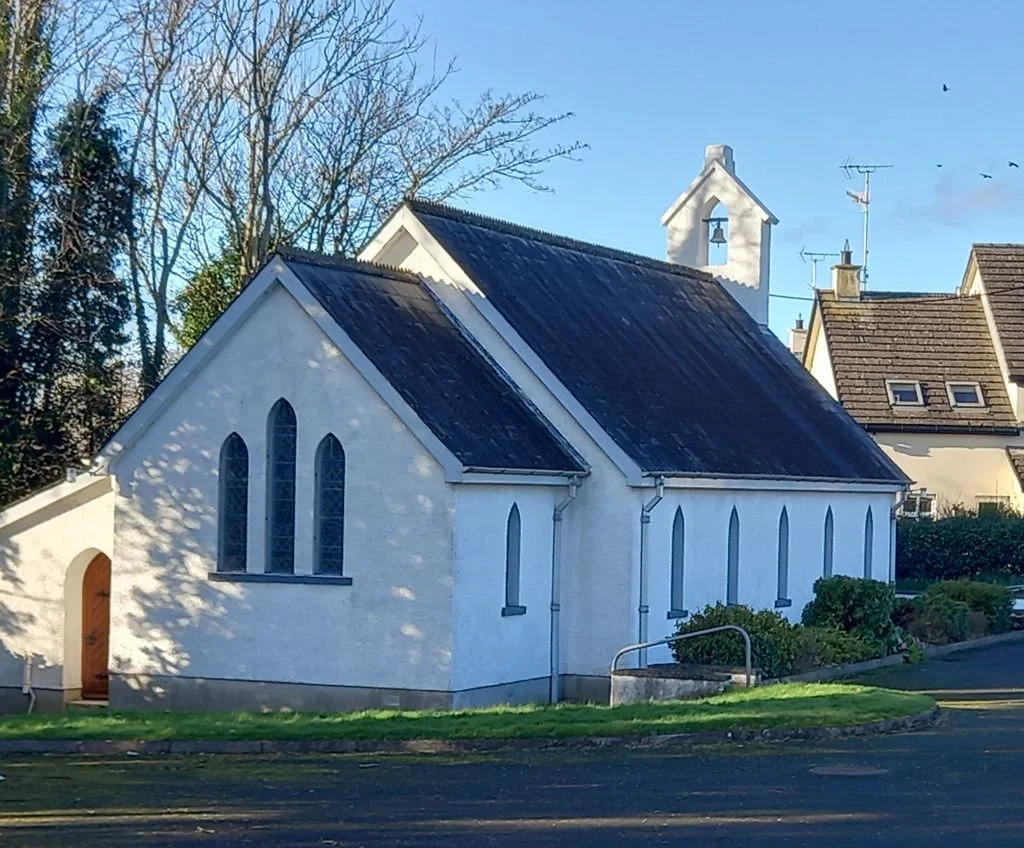
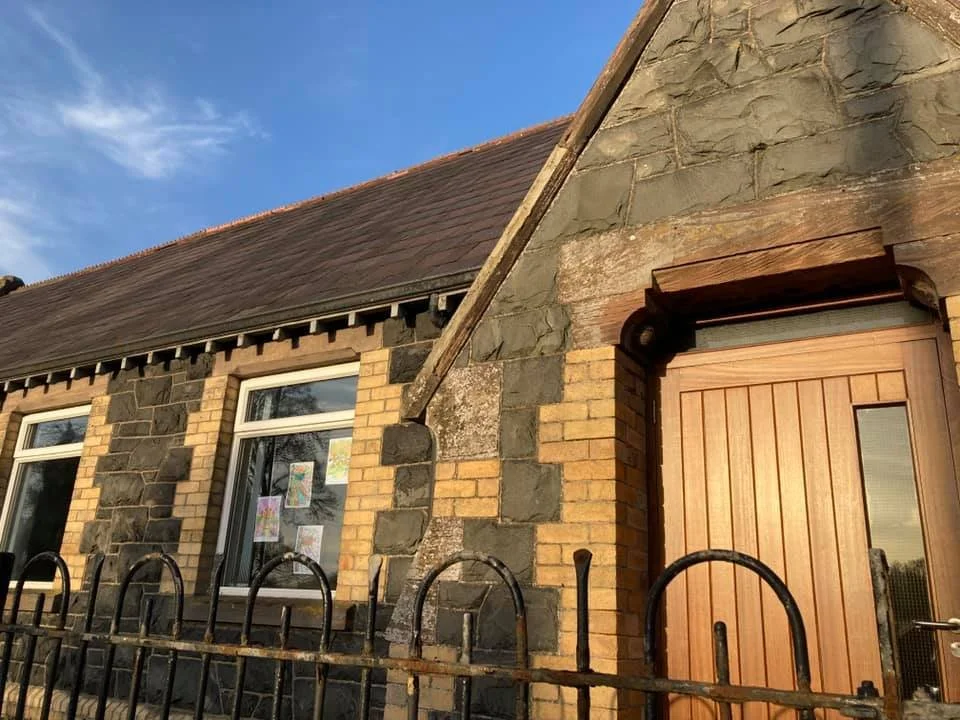
Affectionately known as the “Village or Wee Church” by parishioners, the present building, formerly Seapatrick Village School, was dedicated as a place of worship in 1882. Its purpose was to be a “Chapel of Ease” to Holy Trinity, “for the ease of such inhabitants in Seapatrick village as by reason of distance cannot conveniently resort to their Parish Church”. It was back in 1806 that the church authorities resolved that “the parishioners be authorised to build a school-house of what dimensions they please on the ground to be added to the churchyard”. It was not until 1813, however, when the then Vicar, Reverend Francis Burrowes, offered one to two acres of glebe land adjoining the graveyard, in perpetuity, to build a schoolhouse. The school was built in 1815, not only to educate but also to instruct children in weaving and spinning. A small extension was added in 1817. The Parish Vestry at the time thanked the local Seapatrick mill owner, Mr William Hayes, for building the schoolhouse.
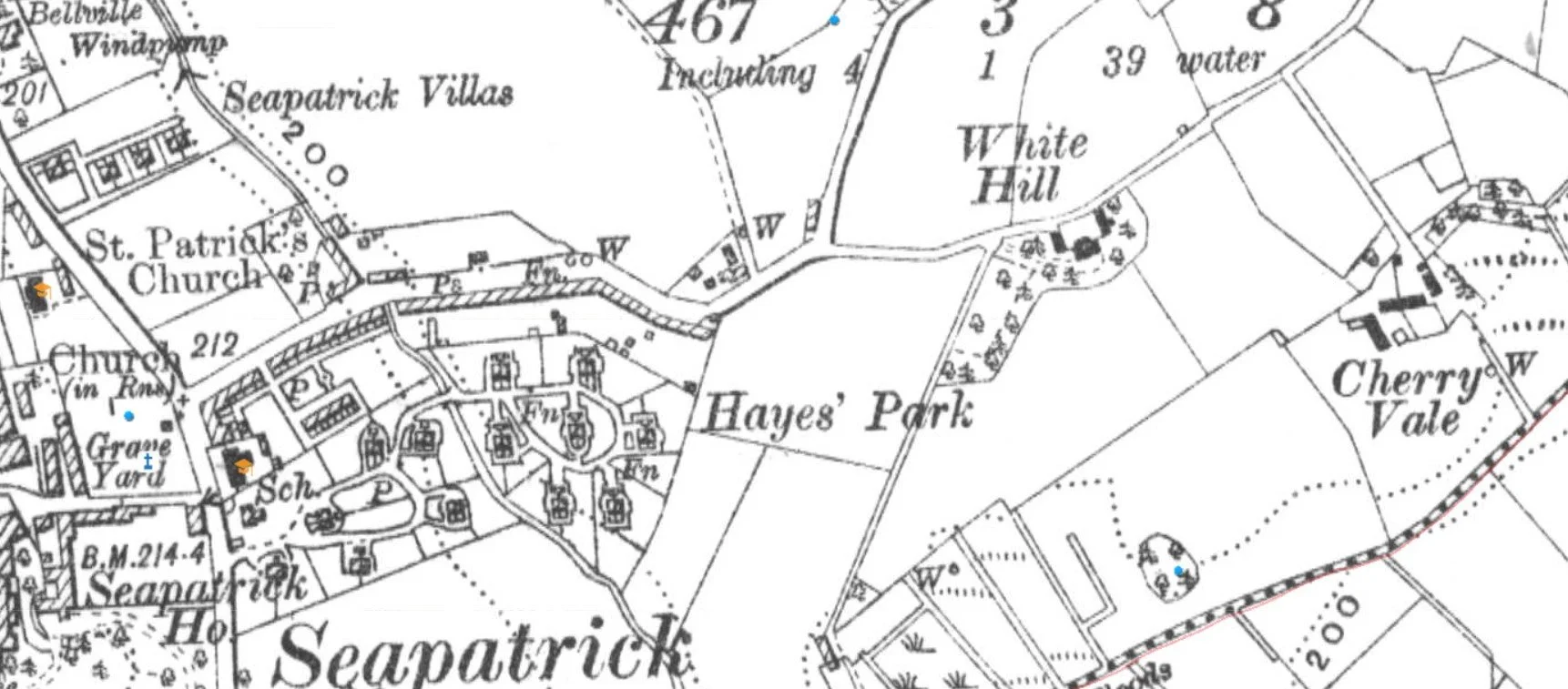
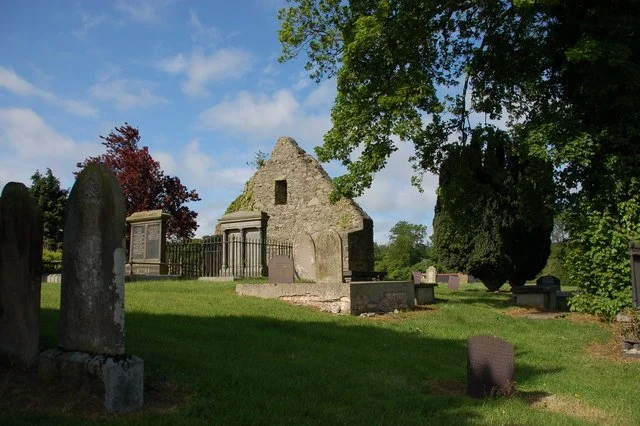
The history of Christian worship in Seapatrick, however, goes back much, much further than 1882. The origins of the old church ruins located in the graveyard adjacent to St. Patrick’s are somewhat shrouded in mystery. Mention is made in 1125c of “nOenuch Descrt Maige” and in 1200c “nDescert Maigi” and Reeves in his “Ecclesiastical Antiquities of Down, Connor and Dromore”, quotes from the Taxation Roll of the Diocese of Down, Connor and Dromore, compiled in the year 1306, which mentions a church at “Disertunde”. In the taxation records of 1422, mention is also made of a parish called “Dysertmoygh”. Reeves goes on to also mention “Vicarius de Soyge-Patrick” in Primate Swayne’s valuation of 1422. It is conjectured for various reasons that they are all one and the same parish, later to be called Seapatrick. Various forms of the name “Seapatrick” appear from 1505 onwards when it was called “Samgpadrig” and, by 1546, this had changed to “Soyge-Patrick”. In 1603, the name “Sea St Patrick” appears on Bartlett Maps.
For many years it has been generally accepted that the name Seapatrick suggests the original Church was founded by St. Patrick himself, as it sits only slightly off what would have been the main direct route between Saul and Armagh, a journey, no doubt, St. Patrick would have made many times. The first recognisable mention of Seapatrick is in the 1609/1610 Magennis patent (Title), which mentions – Sipatrick (alternative Sessiagh Killpatrick), the modern townland being called “Kilpike”. In modern Irish “Suidhe Padriag” translates as “Patrick’s Seat”, which was Latinised as “Sessio Patricii”. The element “sui” is quite common in the names of various hills throughout Ireland. The accepted patron of the original church thus appears to be St. Patrick, indeed a shrine to him was located in the adjacent parish of Tullylish.

By 1630, Roman Catholics had ceased using the church but they continued to use the adjacent graveyard for burials into the late 19th century and indeed into the early 20th century, according to some contemporaneous newspaper reports.
The church in Seapatrick is recorded in various journals as being in very poor condition in 1641, being refurbished in 1698. It has been said by some that this refurbishment was carried out at the request of William of Orange after he passed through on his way to the Boyne in 1690. The church was once again recorded as in good condition in 1721. It was mentioned again in 1743 in Harris’s map of Down as “Sea-Patrick”. Indeed, vestry records for the parish of Seapatrick exist from 1806.
The old church was apparently built in 1670 but, by 1847, having fallen into poor repair, was sold to the local mill owner and vestry member, Fredrick Hayes, for £25. This was during the height of the famine (1845-1849) and a deconsecrated church would have been seen as a very low priority to replace. Two men were employed to partly demolish it and some of the stone was used by a local stonemason, James Watson, to build a sturdy retaining wall (which still exists today) around the graveyard to protect it from grave robbers. The old church had served the parishioners of Seapatrick parish well for nearly 150 years. The west gable wall of this older church, now largely in ruins, can also still be seen today in the graveyard adjacent to the current St. Patrick’s Church.
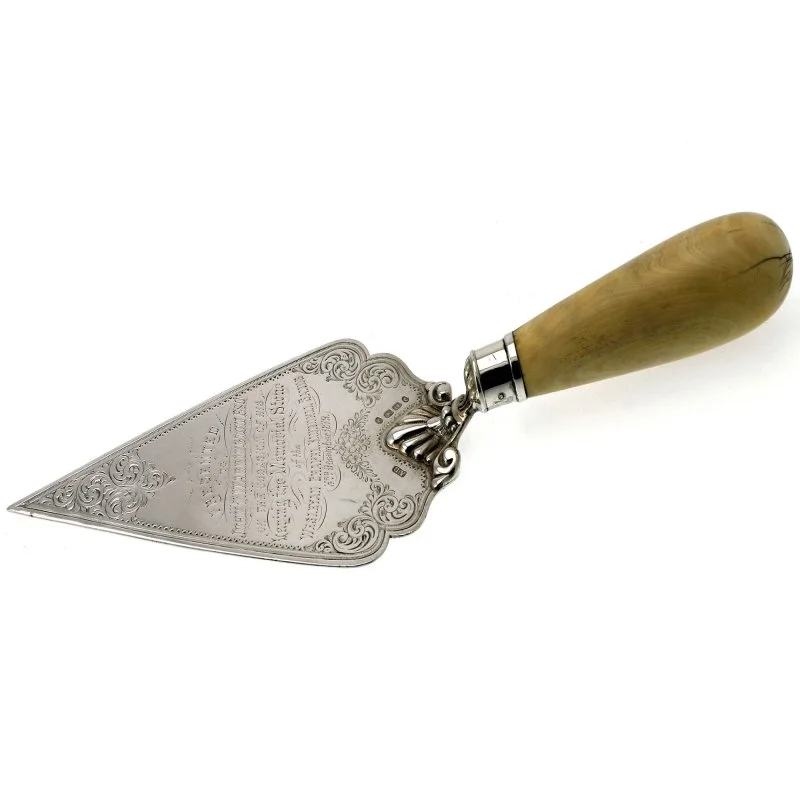
In 1872, the then incumbent of Seapatrick Parish took a decision (for whatever reason) to close Seapatrick School, which did not go down well with the local villagers as it meant their children would have to walk into Banbridge to attend school. Local mill owner, Mr William Hayes, stepped in and agreed to fund and build a school in the village on a different site for the local children. On 10th August 1872, Mrs Wm. Hayes (the wife of the local mill owner) laid the foundation stone for what was to eventually become the new Seapatrick Village School. To mark this occasion, Mrs Hayes was presented with a massive, ornate silver trowel, beautifully ornamented with gold, by the inhabitants of Seapatrick Village. The trowel had been commissioned from Mr William Gibson, Donegall Place, Belfast. It was reported in the Belfast Newsletter in August 1872 to have been “one of the finest things we have seen in trowels”. Following the ceremony, the entire assembly, workers, villagers and children, marched to Banbridge Railway Station, where a special train conveyed them to Scarva and then to the demesne of J. T. Reilly, where they were entertained by the firm of F. W. Hayes and Co.
Opening shortly afterwards, this building was directly across the road from the main “mill hill” entrance to Seapatrick Mill and meant the children of his local workers did not have to undertake the long trek into school in Banbridge.
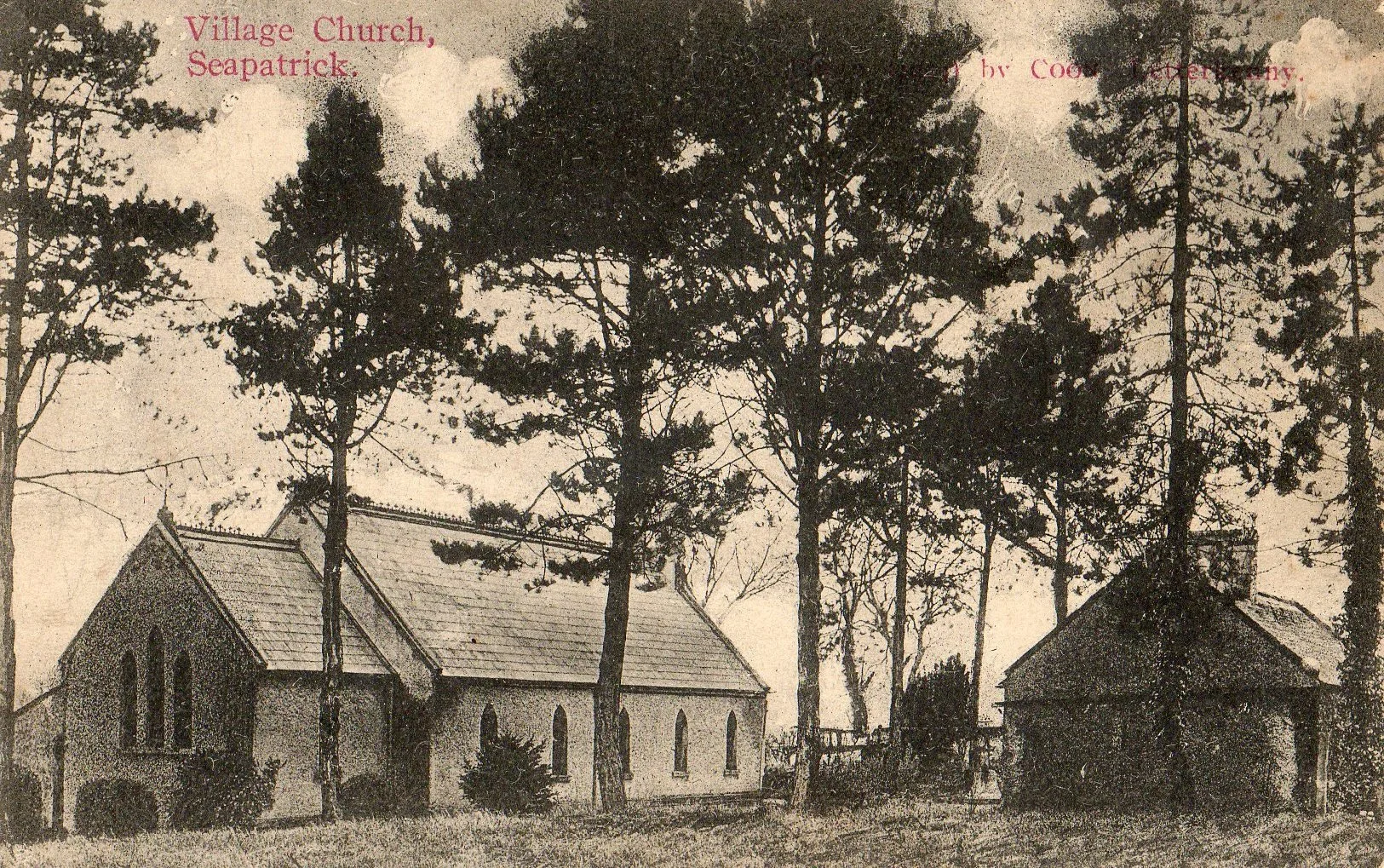
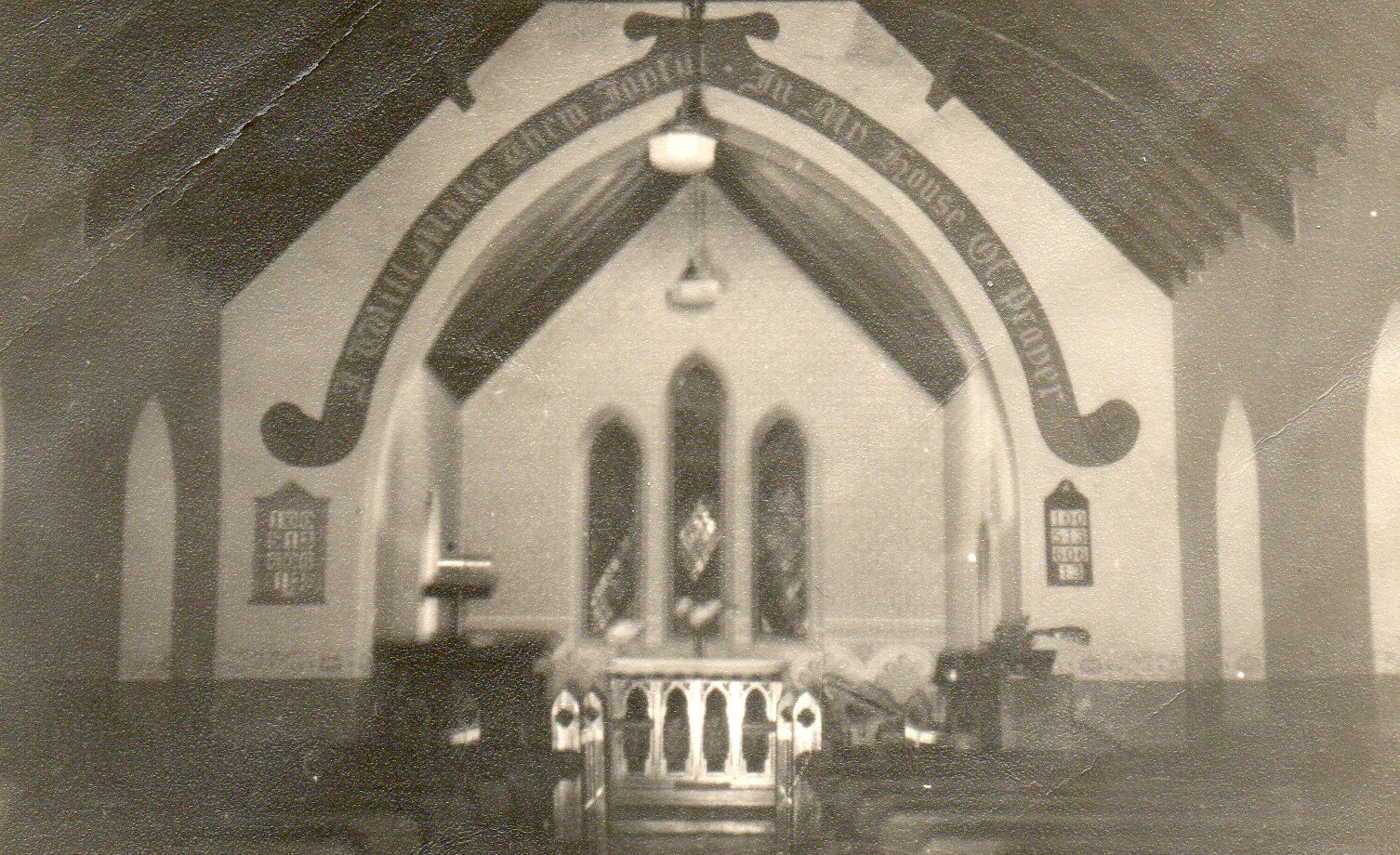
The Archdeacon of Dromore, Reverend Henry Stewart, D.D., then resolved to convert the old schoolhouse into a church. The school was subsequently remodelled, a chancel added along with stained glass windows and, when it first opened around 1880, it was considered to be, according to a contemporary newspaper report, “a very handsome little church”. It was at this stage only used for ordinary public services, but not for the celebration of the sacramental rites of the Church of Ireland.
On Saturday 04 February 1882, the Lord Bishop of Down and Connor formally consecrated the “Chapel of Ease” in the village, dedicated to St. Patrick. Over thirty clergy attended the service and after the consecration the congregation sang the very appropriate hymn, “The Church’s One Foundation is Jesus Christ her Lord”. The Lord Bishop then took his text from the First Epistle General of Peter, v 3, 4. At the conclusion of the service, the offertory amounted to £20 (over £3,000 in 2025) and was devoted to the Village Church Improvement Fund.
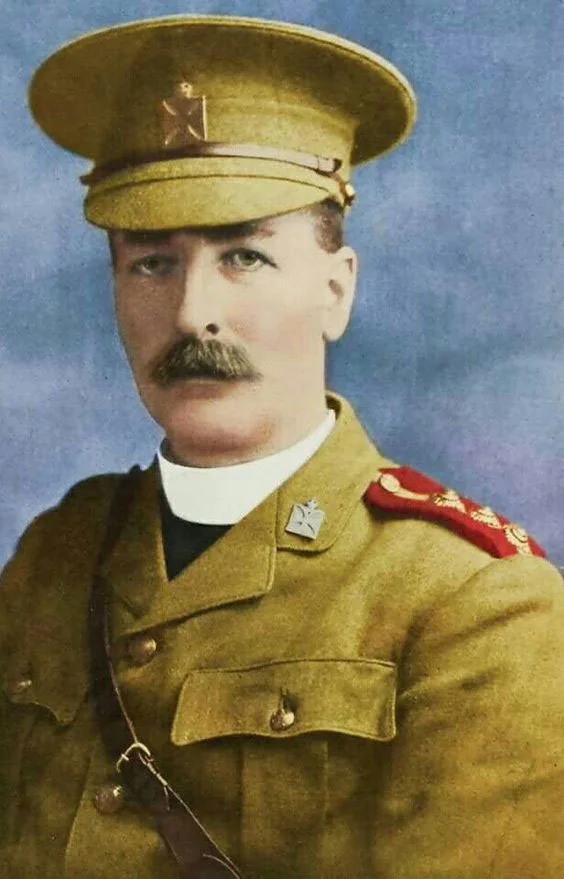
During the Great War, ten parishioners, who all lived in Seapatrick Village, made the Supreme Sacrifice. Their names are recorded on the Parish Roll of Honour and marble War Memorial Tablet in Holy Trinity Parish Church. In addition, the Rector of Seapatrick Parish, the Reverend Richard Ussher Greer, who had volunteered for service as Chaplain to the 12th Royal Irish Rifles, also died whilst on war service.
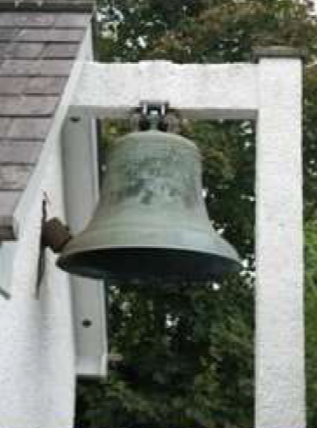
At the right-hand side of the present-day village church, in a specially built concrete frame, hangs a large church bell, which is still rung each Sunday morning as a local call to worship. This bell had originally been presented by the Hill family of Hillsborough to Holy Trinity Church but was then replaced in 1868 to make way for a much larger bell. The “Hill” bell was then installed in St. Patrick’s at some stage after its consecration in 1882. The original inscription on the bell, “J Murphy, Foundry Dublin, Seapatrick Church, By William Hill”, is still visible. On closer inspection, at the apex of the same church gable wall, in its own compact bell tower, hangs the original school bell, retained as an homage to the building’s original use as a schoolhouse. This bell would have been originally used to call the pupils to class and signal lunch and the end of the school day.
The wooden pulpit, choir stalls, lectern and Holy Communion rails all came from what was St. Barbara’s Garrison Church in Holywood Army Barracks, Co. Down in the late 1960s, following a decision by the Army Chaplains’ Department to build a new Garrison Church within Holywood Barracks.
At the end of December 1962, Seapatrick Village School closed its doors for the final time, after some ninety years educating the children of Seapatrick Village. But as one door closes another opens and, in 1965, in a rare moment of forward-thinking, the Seapatrick Parish Select Vestry was able to purchase the old school from the Education and Library Board for future use as a Parochial Hall.
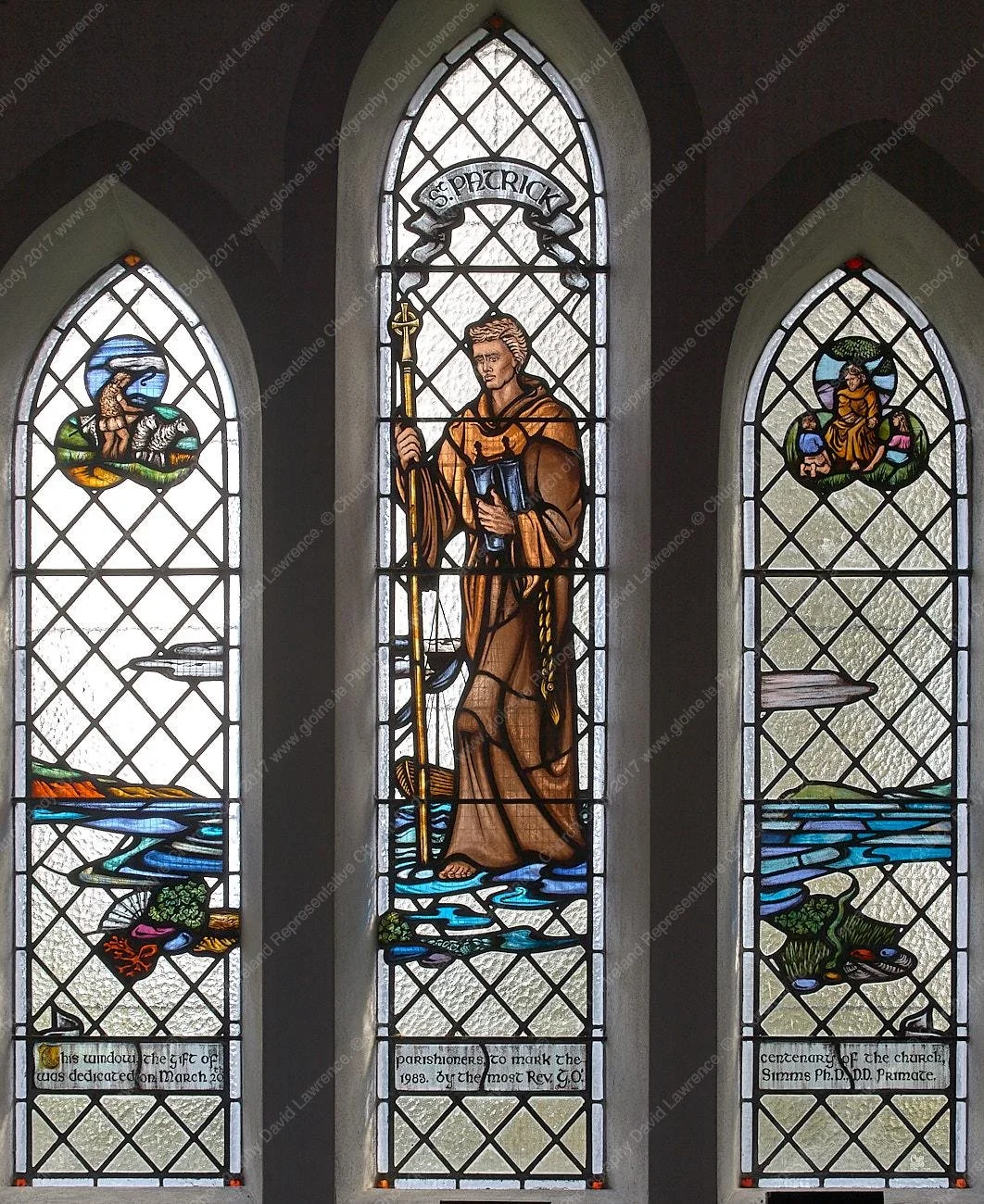
On entering the present church, you are faced with an impressive stained-glass window above the Holy Table, depicting St. Patrick. This window was the gift of the parishioners to mark the centenary of the church and was dedicated on Sunday 20 March 1983 by the Most Reverend Dr. George Simms, former primate, thus bringing to an end a year-long series of events to mark the church’s centenary. The central panel of the window depicts St. Patrick carrying a shepherd’s crook, with the two adjoining panels telling of events in the Saint’s life: the first shows St. Patrick as a slave boy tending sheep on Mount Slemish and the second, teaching the gospel to a group of adults and children - both outlines are woven into the shape of a shamrock.
During 1982, St. Patrick’s Village Church celebrated its centenary with a year-long series of celebrations. On 28 January, this started with a Thanksgiving Service, which had been postponed from 11 January due to a heavy snowfall. The love and affection which the villagers have for their church was demonstrated by the fact that almost every seat was taken an hour before the service was due to begin.
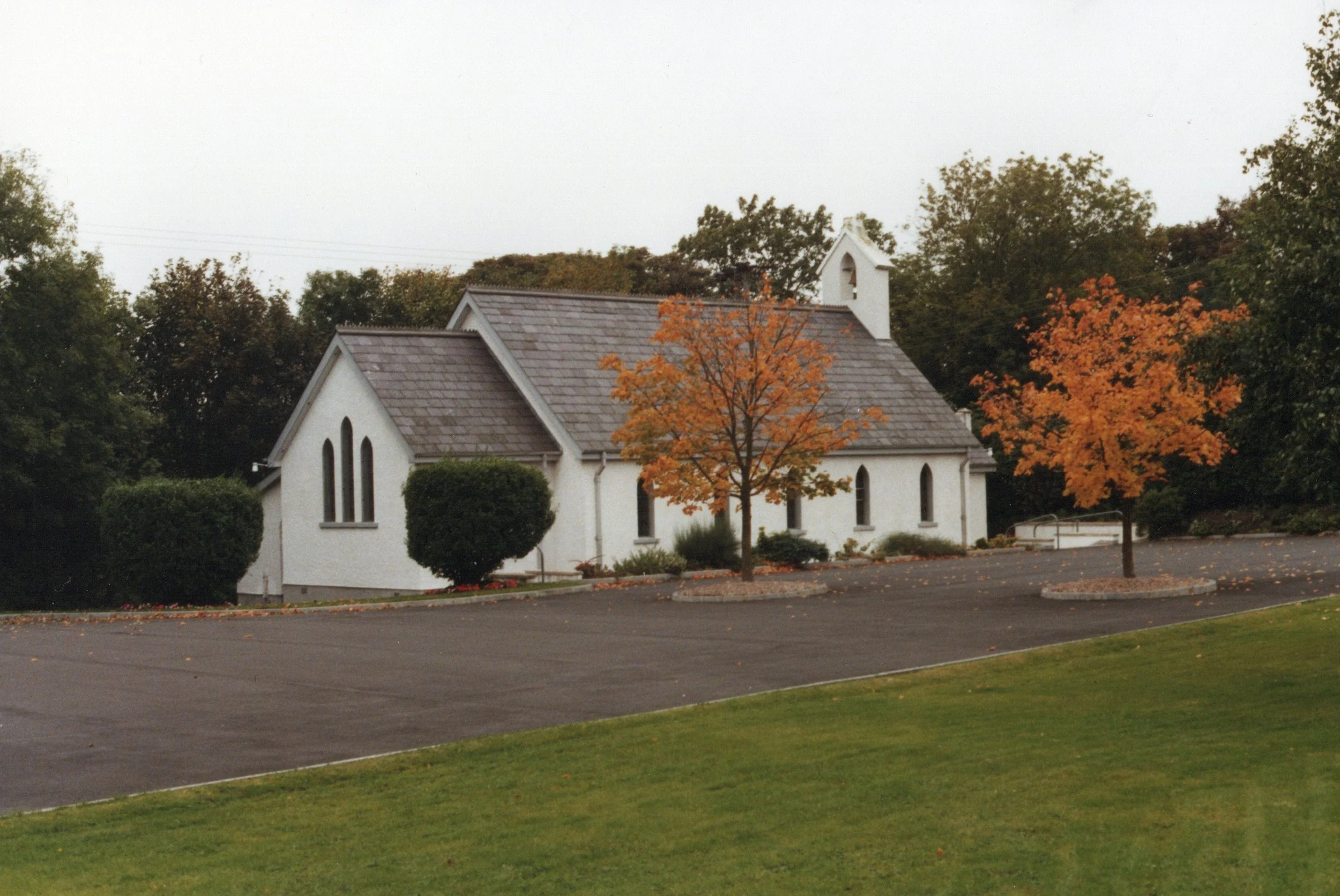
In 1991, St. Patrick’s Church was extensively renovated and redecorated, with the entire church moving up to the Parochial Hall for all services during the renovations. These included provision of a new steel framed roof, which replaced the old wooden frames; new interior cavity walls with improved ventilation and insulation; new interior lighting and heating; re-roofing with reclaimed ‘Bangor Blue’ slates in keeping with the original building; and also an enlarged and fully tarmacked carpark.
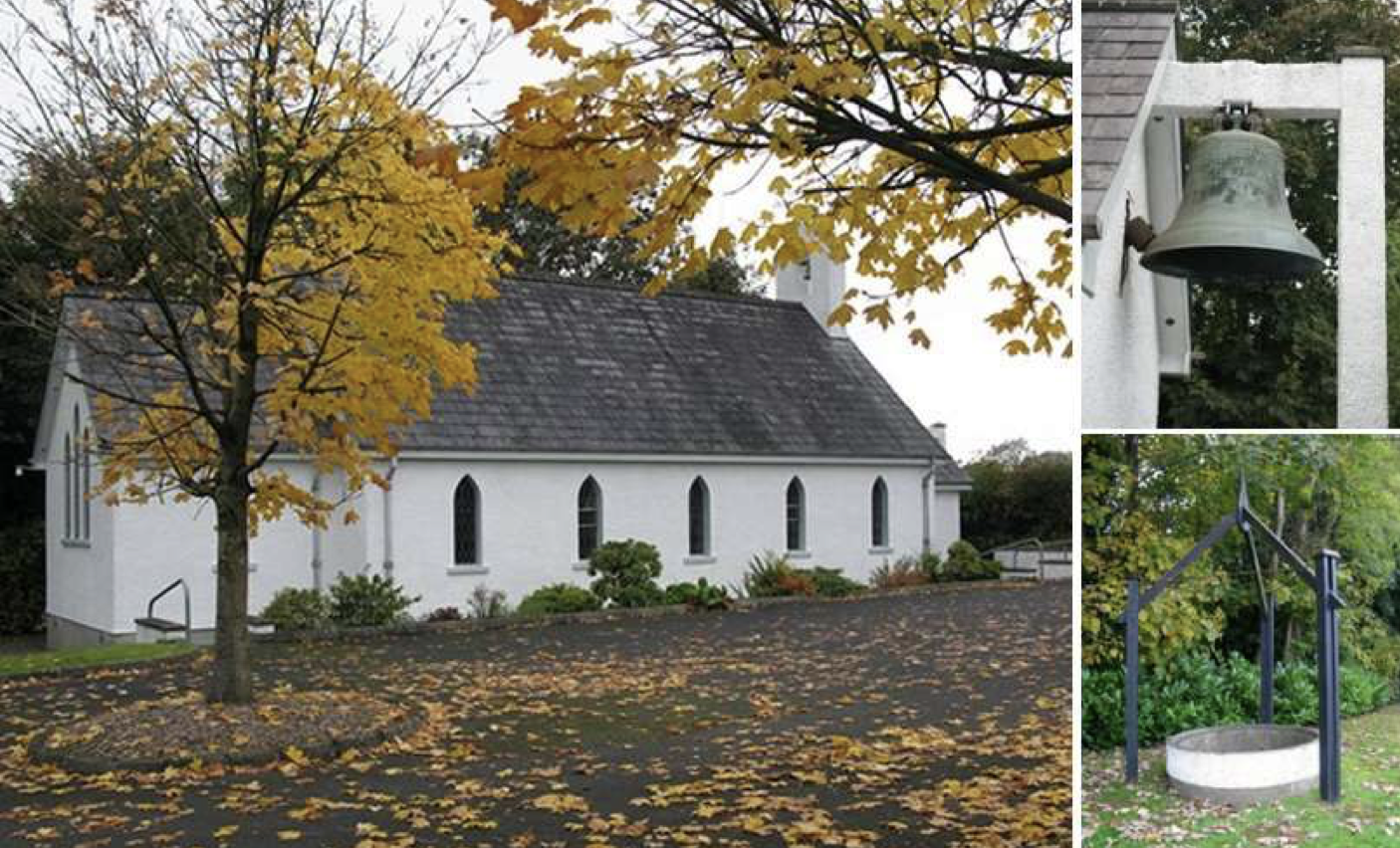
Local folklore also makes mention of a so-called “Holy Well” which, according to a local historian and member of the parish, was visited by pilgrims who believed in the healing properties of the water, well into the 20th century. The exact location of the well “disappeared” in the late 1960s when the new houses in Seapatrick Avenue were being built. No doubt the foundations for these houses may well have disrupted the old stone “shores” which would have drained water towards the River Bann. Indeed, some evidence of these “shores” were unearthed during the construction of the new carpark beside the church. A representation of the well was built following the enlargement of the carpark.
Interestingly, Seapatrick has no fewer than two direct connections with the historic “Siege of Derry” between 1688 and 1689. Christophilus Jenny, M.A., D.D., a former Vicar of Seapatrick (1673) and also Aghaderg Parish, was Captain and Chaplain in Colonel Henry Monroe's regiment during the siege. He was also later to act as one of the envoys sent out from the city to meet the relieving force at Inch. On Sunday 11 August 1689, Rev. Jenny preached a sermon, taking as his text Deuteronomy 23, verse 9: “When the host goeth forth against thine enemies, then keep thee from any wicked thing”. He later went on to become Archdeacon of Derry from 1695 to 1702.
The aforementioned Colonel Henry Monroe was originally from Roe’s Hill, Lenaderg and was buried in the family vault in Seapatrick graveyard after he died in 1727.
Seapatrick Village Church is extremely well thought of locally and indeed has featured on the last two banners of the local Orange Lodge, Banbridge Bible and Crown Defenders, Loyal Orange Lodge 423.
It has been said many times before that a parish is not just made up of a building but the mainstay of the church is always its people. Indeed, the parishioners who have attended St. Patrick’s Village Church over the years have always been fiercely proud of their “Wee Church” and continue to be loyal in both their attendance, dedication and service to the wider Seapatrick Parish.
A special thanks to Tommy McClimonds for providing our historical information.